
A siderial watch measures siderial (star) time. A star (or other celestrical object) transits the upper part of a meridian every 23 hours, 56 minuites and four seconds, so a siderial day is shorter than a normal day measured by a normal watch. Knowing the siderial time was important for surveyors fto determine longitude and azimuth.
The Society has two ssidereal watches in its collection.
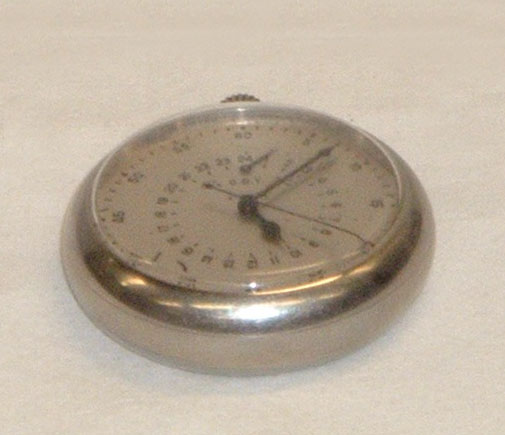
Watch, Sidereal
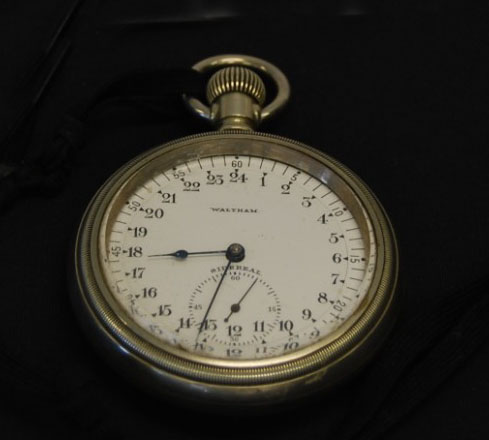
Watch, Sidereal, Waltham